Turn-up & Test
Our unique, patented “Turn-up & Test” is intuitive, software driven and complies with the Control of Noise Act 2005. It requires no qualifications, or specialist training to use, only the H4TLT supplied headset!
Audiometric Hearing Tests
Hear 4 The Long Term’s hearing test delivers the simplest and most convenient way to provide hearing health surveillance to your staff.
Using our unique patented “Turn-up & Test” – it enables you to deliver on-demand tests without the disruption or unnecessary excessive costs of conventional one-to-one testing by an onsite audiologist.
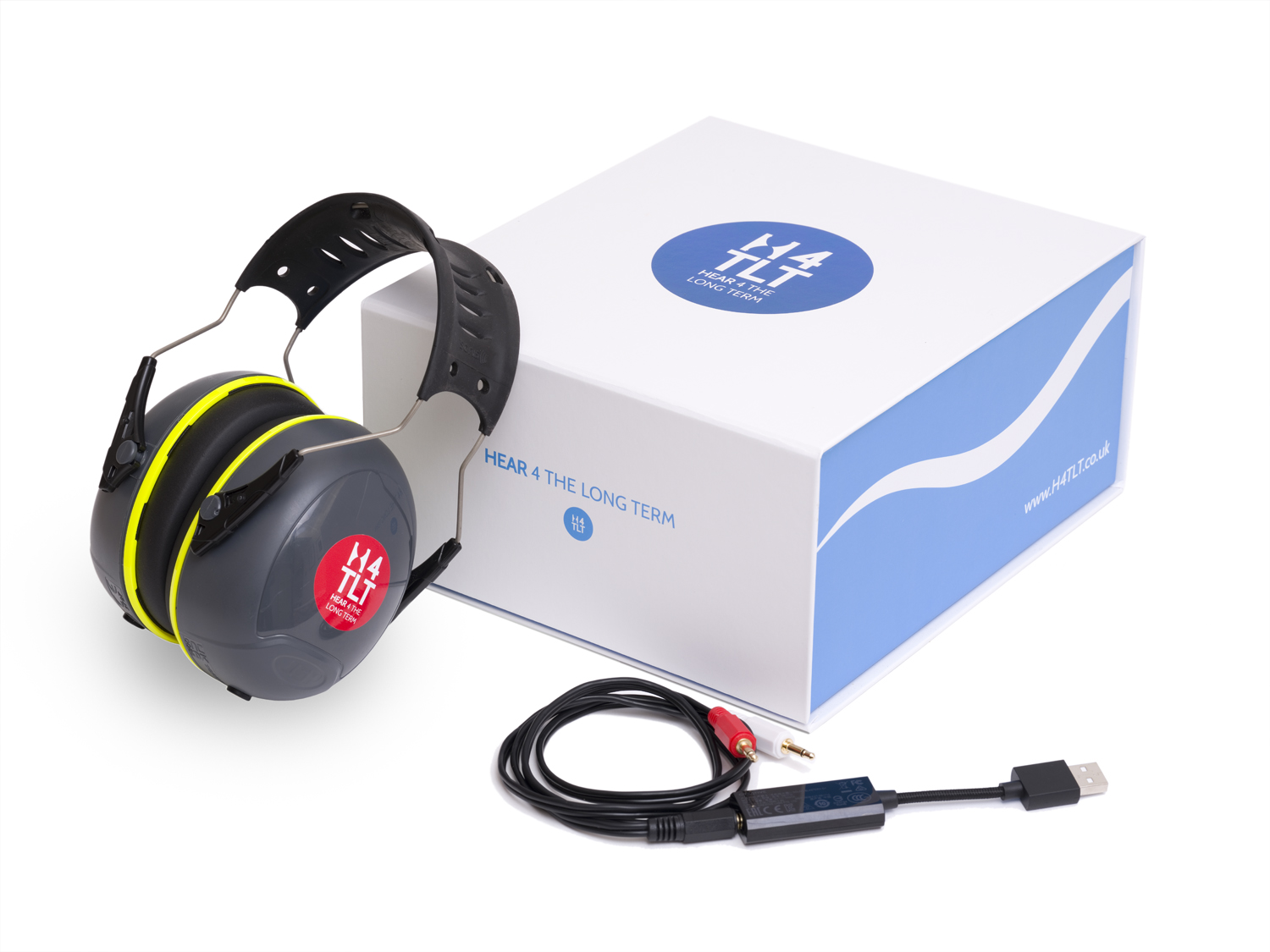
Our user operated hearing test system can be conducted anytime, anywhere, and only requires 2 things:
Simple and Convenient
In just a few steps, you can now deliver a hearing test reliably, quickly and cost effectively!

Choose Package
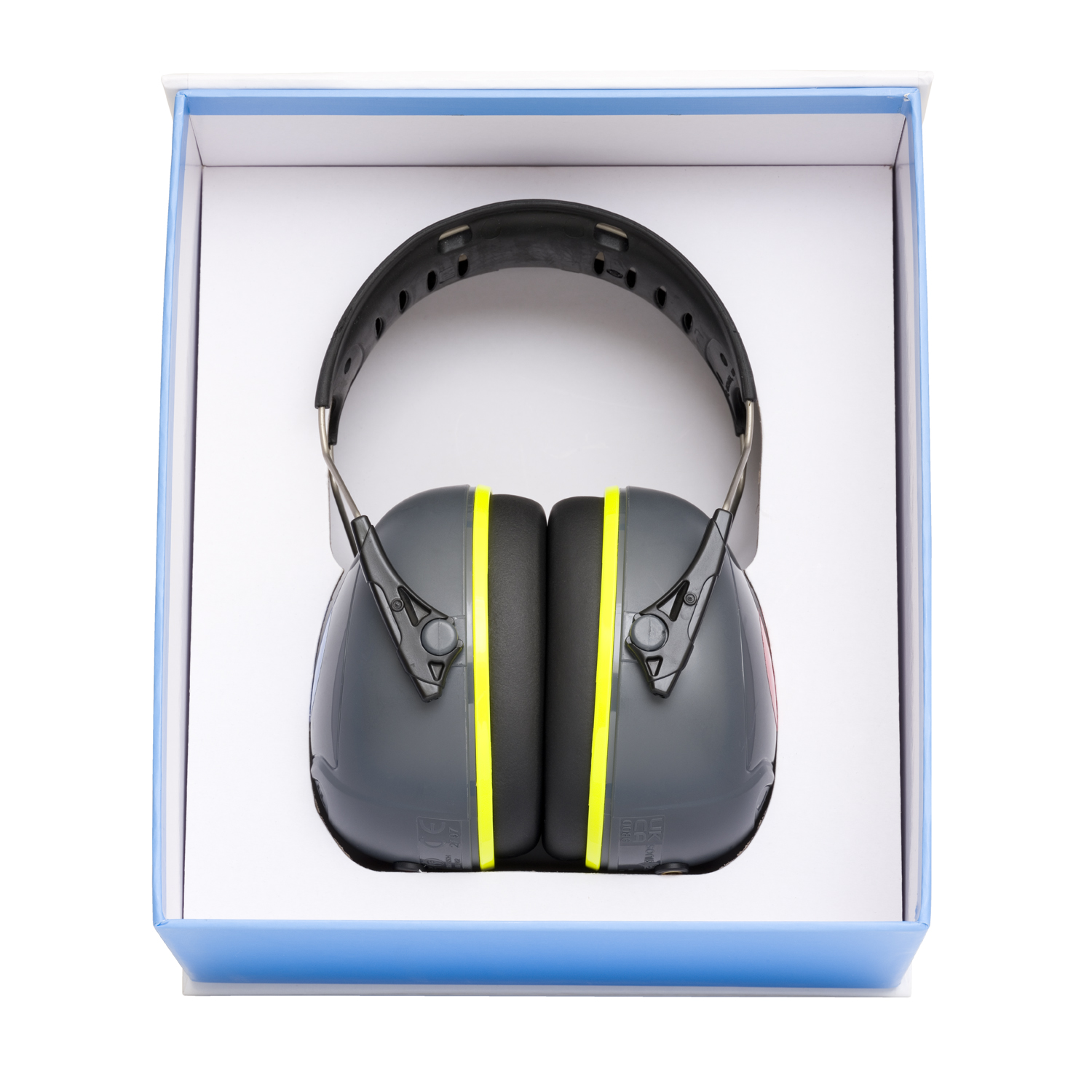
After choosing the package, based on the number of tests you require, we send you your calibrated H4TLT Headset.

Get Started
You just connect the H4TLT headset to your computer and access the test using the link we will provide. Each test takes on average 15-20 minutes.

Results
Your company’s designated responsible person will be given a password to view the results.

Qualified Expertise
Either your own occupational health nurse, or our qualified expert will provide a summary report as required by HSE guidance, plus a GP referral letter if required.
Traceable, Intuitive Testing without the Fuss
This H4TLT test is a UKCA marked, MHRA registered class 1 medical device which meets all British Standards.
No other hardware is required to purchase or rent, no stress for you or your IT department with downloading software, and no software updates.
Cost and Time Management
The H4TLT Hearing Test enables you to deliver affordable hearing health surveillance to your staff.
It removes the barrier that one-to-one testing creates by automating the process enabling you to test your staff whenever you need to with a fully automated system.
This flexibility frees you from having set testing days so you can test staff to fit around your company’s production down times and quiet periods, or change at immediate notice if a rush order came in.
Night shift, part-time, weekend workers and those on holiday / sick can all be tested at your convenience.
Fully automated, UKCA marked and MHRA registered
24/7 on Demand Hearing Health Surveillance
The Control of Noise at Work Regulations 2005 mandates the following:
9.1: “If the risk assessment indicates that there is a risk to the health of his employees who are, or are liable to be, exposed to noise, the employer shall ensure that such employees are placed under suitable health surveillance, which shall include testing of their hearing.”
Although the work exposure levels usually change, most companies prefer to continue with annual surveillance.
Results and Reports
At the end of each test the individuals result is instantly shown on the screen and emailed to that person.
Test reports and referrals are reviewed by a qualified expert and provided by email to your nominated person.
At the end of testing, we can provide a comprehensive HSE categorised summary report, which would make up part of your health surveillance program documenation.
If you have your own company’s designated person, a password can be provided to enable them to see the overall results.
Everything is stored on UK-based servers.
f.a.q.
Audiometric Hearing Tests
Yes.
The Control of Noise at Work Act (2005) mandates the provision of hearing health surveillance and HSE
L108 provides additional (non-mandatory) guidance.
It’s the simplest and easiest test available.
The H4TLT Hearing Test enables you to deliver affordable hearing health surveillance to your staff. It removes the barrier that one-to-one testing creates by automating the process, enabling you to test your staff whenever you need to. This flexibility allows you to schedule testing around your company’s production downtimes or busy periods, instead of being restricted to fixed testing days. Night shift workers, part-timers, weekend staff, and those on holiday or sick leave can all be tested at your convenience.
No other hardware, apart from the H4TLT headset, is required to purchase or rent, no stress for you or your IT department with returning items on time or downloading software, and updates.
The H4TLT system is calibrated to the required British Standards.
It is UKCA accredited (formally CE) as a Class 4 Audiometer and registered as a Class 1 Medical Device with the MHRA (Medicines and healthcare Products Regulatory Agency.
A copy of the headset calibration certificate is supplied with the headset.
After choosing the package, based on the number of tests you require, we send the calibrated H4TLT Headset. We also provide training via video link or telephone to ensure your nominated representative is familiar with the test operation.
To start the test, you simply connect the headset to your computer, follow the simple set-up guide and access the test using the link provided to you.
Following the on-screen instructions the hearing test will take around 15-20 minutes, after which the results will be displayed on screen. This can be set up so they will also be emailed to your employee if they entered their email address at the start of the test.
Your staff just need to ‘Turn up & Test’.
The results are overseen by our qualified expert who provides a summary report, as required by the HSE guidance and a GP referral letter if required.
Yes.
You will be provided with a guide to set the test up once the headset arrives and an initial training session with one of our team to answer any questions that you might have.
No.
That requirement is the biggest single barrier to take-up of tests and the problem we are most proud of solving.
The test is automated, and the system automatically calculates the results so there is no requirement for a qualified person to be physically present.
The H4TLT test system functions as an audiometer and audiolmetrist in one.
Otoscopy (looking in a persons ears) not mandated, and the vast majority of the workforce will have CAT (category), 1 or CAT 2 hearing. For the very few that fall into CAT 3 or 4 a referral will be raised for a diagnostic test, which would include Otoscopy.
Straight after the test, the system produces an immediate on-screen result including an audiogram. We can set the system up to email it to your employee if required.
All test data is held in a secure client database and is reviewed by our in-house experts. Access can be granted to your own responsible person.
Whilst an individual’s test result informs them on their category of hearing, annual testing and reviewing the results over time will give you an insight into how well your noise control measures and PPE strategies are working. This will be both from an overall, and an individual perspective, that can inform educated decisions on additional measures you may need to implement to safeguard your employees.
The purpose of hearing health surveillance is to triage those with normal hearing (Category 1), give advice to those whose hearing is a little worse than others of their age and gender (Category 2) and refer those who may need a diagnostic test (Category 3 and 4).
It is impossible to diagnose NIHL without a diagnostic test so the results of hearing health surveillance only would not lay the blame at your door.
People can acquire NIHL for a variety of reasons not connected to noise exposure at work and without further investigation it is impossible to assign blame.
This highlights the importance that you, as an employer ensure that your staff are wearing and fitting suitable hearing protection (see our fit-test product, which may be of interest) and also to give new starters who will be working in a noisy environment a ‘baseline ‘ hearing test as it may highlight that someone has had hearing loss for some years before they started work with you.
No.
If somebody tries to cheat, they will see a screen advising they are pressing the button when no sound is present and will be taken back to the start.
Staff members that record Category 3 or 4 classification are automatically referred for a diagnostic test.
Inner ear hearing loss is the type typically caused by excessive exposure to noise and is irreversible. This type of loss is identified with a diagnostic test. Sometimes wax, a head cold or a middle ear pathology may cause loss which is treatable.
The guidance states that you should test staff ideally before they start working in the noisy environment or shortly afterwards.
It should be provided to staff on an annual basis for the first 2 years and after that, providing no deterioration has been detected it can be reduced to every 3 years. Our clients find that annual testing on an ongoing annual basis is much easier to manage.
No, the tests you have remaining will not expire, however your H4TLT headset will require annual calibration with us to ensure the tests are valid. Once this is done, your remaining tests will carry forward.
Calibration is £80+ VAT.
Many of our clients, purchase enough tests for a two-year period up front and carry forward any remaining tests as this can be a more cost effective for them.
Simply get in touch to obtain a quote and on receipt of a Purchase order we can give you access to however many more you need.
You would be unlikely to need both the hearing test and baseline line hearing test.
The baseline test is designed to help employers who want to identify if new staff, who may not have had a hearing test before have existing hearing loss.
This will help to protect you as the duty holder from possible future claims and ensure that the general issue hearing protection is not ‘over protecting’ and blocking out warning signals and alarms.
If you use our hearing health surveillance product then you can use that for the baseline/induction test as well.